What is Parylene N dimer?
Parylene N dimer is [2.2]paracyclophane, CAS 1633-22-3, the cyclic dimer precursor used to form Parylene N films by CVD/VDP.

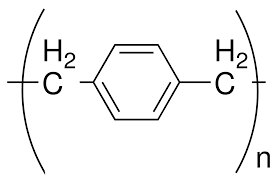
CAS 1633-22-3 · White to off-white crystalline solid/powder
Parylene N dimer is [2.2]paracyclophane, CAS 1633-22-3, a cyclic dimer precursor used to form Parylene N polymer films in chemical vapor deposition (CVD/VDP) processes.
Palica Chem supplies Parylene N dimer for buyers qualifying material for Parylene N vapor deposition. This page identifies the substance, separates reference properties from supplied specifications, and keeps inquiry details limited to information that can be confirmed for a specific batch.
| Field | Detail |
|---|---|
| Product name | Parylene N Dimer |
| Chemical name | [2.2]Paracyclophane |
| Synonyms | Di-p-xylylene; Di-1,4-xylylene; Parylene N dimer |
| CAS Registry Number | 1633-22-3 |
| Molecular formula | C16H16 |
| Form | White to off-white crystalline solid or powder |
| Use | Precursor for Parylene N vapor deposition |
These values identify the chemical entity and help buyers compare technical references. They are not Palica's guaranteed sales specifications unless repeated in a batch document.
| Property | Reference value or description | Scope |
|---|---|---|
| Molecular formula | C16H16 | Substance identification |
| Molecular weight | 208.30 g/mol | Reference data |
| Appearance | White to off-white crystalline solid or powder | General physical form |
| Dimer melting point | Published supplier data commonly reports about 285-288 degrees C | Reference property for CAS 1633-22-3 |
| Polymer film thermal data | Values such as about 420 degrees C refer to Parylene N polymer film behavior, not the dimer melting point | Film property, not dimer specification |
The following specification values are the currently published Palica product values from the existing Parylene N dimer page. Final acceptance limits should be confirmed against the quotation and batch documentation.
| Item | Published value |
|---|---|
| Appearance | White crystalline powder |
| Purity | 99.0% min. |
| Melting point | 285.0-288.0 degrees C |
| Loss on drying | 0.10% max. |
| Residue on ignition | 0.20% max. |
Parylene N dimer is vaporized and converted in a Parylene deposition system to a reactive monomer intermediate, which then polymerizes on the substrate surface as Parylene N film. Palica Chem supplies the dimer precursor, not coating services.
Typical qualification contexts include electronics, sensors, precision assemblies and other customers that operate or qualify Parylene CVD/VDP processes. Suitability depends on the buyer's equipment, deposition recipe, target film properties and acceptance testing.
| Term | What it means | What this page supplies |
|---|---|---|
| Parylene N dimer | [2.2]Paracyclophane, CAS 1633-22-3, the cyclic precursor charged to the deposition process | Yes |
| Monomer intermediate | Reactive p-xylylene species generated during pyrolysis in the deposition process | No; not supplied as a stable packaged product |
| Parylene N film | Final poly(para-xylylene) coating formed on the substrate | No; formed by the customer's CVD/VDP process |
| Selection factor | Parylene N | Parylene C |
|---|---|---|
| Chemical structure | Unsubstituted poly(para-xylylene) film formed from [2.2]paracyclophane | Chlorinated poly(para-xylylene) film formed from the corresponding chlorinated dimer |
| Halogen content | Halogen-free | Contains chlorine |
| Dielectric behavior | Often selected where low dielectric loss and good dielectric behavior are important | Common general-purpose dielectric coating |
| Crevice penetration | Generally associated with stronger penetration into narrow gaps and crevices | Typically lower penetration than Parylene N in difficult geometries |
| Moisture barrier | Useful, but not usually selected as the strongest moisture barrier option | Usually provides better moisture and corrosive gas barrier performance |
| Typical selection rationale | Halogen-free chemistry, dielectric performance, and penetration into complex geometry | Broad availability, general-purpose use, and stronger barrier requirements |
Neither type is superior in every application. The choice depends on device geometry, barrier requirements, dielectric targets, process conditions and qualification testing.

Packaging, quantity and supporting documents should be confirmed during inquiry. Batch-specific specifications and supporting documentation are available upon request. Palica currently keeps the existing Parylene N dimer SDS/MSDS file reachable at its historical URL.
Store in closed containers according to the applicable SDS and the batch or shipment documents supplied for the lot. Buyers should evaluate storage, handling and transport requirements under their local regulations and internal EHS procedures.
Parylene N dimer is [2.2]paracyclophane, CAS 1633-22-3, the cyclic dimer precursor used to form Parylene N films by CVD/VDP.
No. The dimer is the precursor material charged to the deposition process. Parylene N polymer is the final film formed on the substrate.
The CAS Registry Number for [2.2]paracyclophane, commonly supplied as Parylene N dimer, is 1633-22-3.
In a Parylene CVD/VDP process, the dimer is vaporized, converted to a reactive monomer intermediate, and polymerized as a thin Parylene N film on the substrate.
Parylene N is halogen-free and often selected for dielectric behavior and crevice penetration. Parylene C contains chlorine and is commonly selected for stronger moisture and corrosive gas barrier performance.
Published Palica values include appearance, purity, melting point, loss on drying and residue on ignition. Packaging and batch-specific documents should be confirmed during inquiry.
Last reviewed: 2026-08-28.
Tell us the grade and volume you need. Your message goes straight to our technical sales team.